
The Human Advantage in closing the gap between knowing and doing
The quality of our life is, in so many ways, defined by the quality of our health.
Most of us know this, at least on some level, and yet – it still slips away from us.
Like sand sliding through our fingers, the habits that protect our vitality are often the first to fall as we navigate each new or challenging chapter. Long nights, short sleep, stressful seasons, growing families, challenging careers. Those aspects of our lives demand attention, and they can often feel all-consuming enough that prioritizing yourself starts to feel indulgent; something that you want, but don’t need.
And we might go on like that for a long time. At least, until something breaks. Then, we have no choice but to react.
As the saying goes, everyone has a million problems until they lose their health. Then, they have one problem.
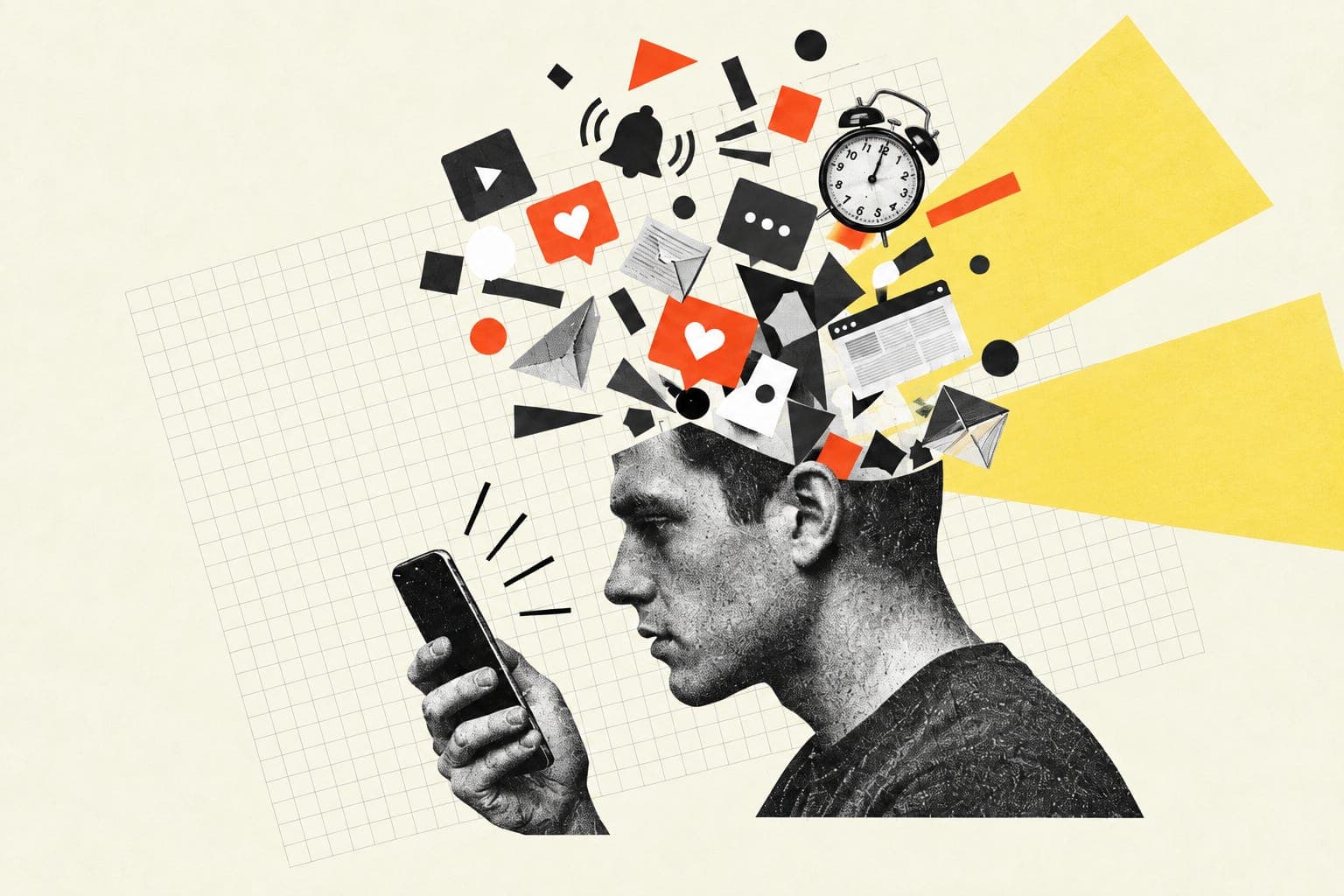
Here’s the really crazy part: we have more information about our own bodies than any generation before us, from sleep scores and heart rate variability to glucose curves and on-demand lab work. And yet roughly 6 in 10 American adults live with at least one chronic disease, and 4 in 10 live with two or more.
If we have more data, more tools, and more information, what is still missing from the equation?
That gap is precisely where Coya sits. We are a company built on the belief that health shouldn’t have to break before we take it seriously, and that in a world overflowing with health data, our greatest advantage is still human. The future we are working to help build is one where prevention is the default rather than the exception, where the technology in our pockets and on our wrists is paired with human guidance, and where protecting our vitality happens long before we’re forced to react.
That belief is why, last week, we hosted our first annual keynote, The Human Advantage, at Tech Week Grand Rapids. We wanted to bring together a handful of incredible people who are tackling this same problem from very different angles, to hear what they’re seeing on the front lines.
“Mid-century, people were living only to be in their late 50s on average across the world,” explained our CEO and co-founder, Jason Mejeur, during his opening address. “Now people are living into their late 70s. We literally added 20 more years of life to the population. The new ceiling is not infectious disease. The new ceiling is now chronic disease.”
Preventing chronic disease, he explained, comes down to how we sleep, move, eat, and manage stress. And he challenged the room to see every one of those daily decisions as “either feeding disease or fighting disease.“
That sounds heavy, but it’s actually hopeful. Because we have far more control and agency over our health outcomes than we realize. And so many of the decisions that matter most (sleep, sunlight, a walk, a slow breath) are free.
At Coya, we’ve always believed that data without context is noise, and coaching without data is generalized advice. The most meaningful (and lasting) behavior change tends to happen when you combine the two.
So, if you ask us, the future of health is still decidedly human. The technology gathers the signal; people help turn it into action.
To explore what that looks like in practice, we invited six speakers from six very different high-stakes arenas onto one stage.
Tyler Ford, Professional Basketball Referee
Now in his 12th season as a referee at the highest level, Tyler opened with a reality every referee (or athlete, for that matter) knows well: nobody notices you until you get something wrong.
“A fan simply just sees a missed call… They don’t see the work and the time and the commitment that goes into every single game to try to be at your very best.“
That commitment is hardly glamorous. If anything, it’s grueling. It often means being on the road 23 days out of 30, going to sleep around midnight after studying film or filing a game report, and waking at 4:15 a.m. to catch a flight before working another game that night on four hours of sleep. “It can be frustrating that you can be at the top of this in the entire world, and people still think you’re incompetent,” he admitted.
What gets him through is a clear split between two mindsets. “Once you walk onto the floor, you can’t be in evaluated mode. You have to be in performance mode,” he said. “That little voice can’t be on your shoulder talking to you during the game.“
Off the floor, he focuses on what he can control, beginning with an eight-week preseason cardio buildup. The first few workouts are miserable, he said, but then something shifts: “I’m not running through mud anymore.” And when he prioritizes sleep, nutrition, and fitness, “you certainly feel like you’re performing better.“
Chief Bryan Rippee, Texas Highway Patrol
Chief Rippee has spent more than 30 years with the Texas Department of Public Safety. When he first became a sergeant, taking care of a trooper meant making sure they had the right equipment, training, and supplies, and the culture around stress was simple.
“Toughness was basically not complaining, not showing emotions, not allowing things to bother you, and just kind of pushing through the day.“
The problem is that pressure doesn’t disappear just because you’ve learned to live with it. “You’re just used to it, but it’s still there, and it’s still happening.” Chief Rippee called his own education on sleep and nutrition “mind-blowing,” and as that information has reached his troopers, one piece of feedback has stuck with him: “I didn’t know how bad, bad was.“
When you’ve been running on short sleep and chronic stress for years, your baseline quietly resets, and exhaustion starts to feel normal. Many people only realize how depleted they were once they experience what better feels like.
For Chief Rippee, investing in his people’s health should be a non-negotiable part of leadership. “Why would we not spend money to provide resources, training, and education?” he asked. The goal is a workforce that’s ready for the worst days on the job, and troopers who can “walk away from 30 years of this type of stress” and enjoy a long, healthy retirement.
Andy Beckman, Garmin Health
“For most of history, healthcare has relied on snapshots,” argued Andy Beckman, who has spent 17 years at Garmin Health. Usually, those snapshots come in the form of an annual physical, an occasional blood test, or a blood pressure reading every few months. “But health doesn’t happen that way, does it?” Andy asked.
Wearables changed that by offering something closer to continuous footage, allowing people to see their baseline and notice when they drift away from it.
So when a score dips, his advice is to look for context before reacting. Is this a one-day blip or a trend? Did you have a hard workout, a late dinner, or one drink too many? He showed two people completing an identical workout, one thriving and one struggling. “It’s not the workout, though, that’s making the challenge,” he said. It’s that person’s capacity on that particular day.
“Seeing is not enough. The wearable can provide the signal… but at some point, that insight has to turn into action.“
He also made a point that often gets lost in conversations about health tech: “The trust isn’t the feature. It’s just a prerequisite for the action.” Nobody changes their behavior based on a system they don’t trust. His closing line applies whether you wear a tracker or not: “The body’s been speaking forever. It’s just a matter of, are you going to listen?“
Dr. Melissa Sundermann, Corewell Health
After nearly 30 years practicing medicine, Melissa realized she had become reactive, handing out prescriptions and managing disease instead of preventing it. That led her to lifestyle medicine, which holds that 80 to 90% of chronic disease is lifestyle-driven. It surprised her that she had learned almost none of this in medical school. Her nutrition training, she joked, was limited to tube feeding in the ICU.
Today, she often speaks at longevity and biohacking conferences, and she doesn’t soften her message.
“If you do not get these foundations at your core, none of that stuff is going to work, and you’re going to spend a lot of money.“
When patients say a disease runs in their family, she offers a gentle reframe: “Genes run in families. But I say, so do recipes and lifestyles.” In her experience, people usually aren’t missing information. “I know the what. I know the why. But I don’t know how to do this.“
One practical detail worth knowing is that Corewell offers shared medical appointments, where 10 to 12 patients learn and cook together. These are billed to insurance as regular office visits, so patients typically pay only a copay. If your health system offers group visits or cooking classes, they may be one of the most affordable forms of support available. And while the program has cut utilization and saved millions, Melissa measures success differently: “It’s one thing to say my A1C went down, but it’s another thing to say, oh my gosh, I had energy to play with my grandkids.“
Cory Johnson, JA Benefits
“I’m the money guy,” Cory said. “How are we going to pay for all this?” Usually, the answer runs through an employer health plan, and the numbers are bigger than most of us realize. In one plan he works with, family coverage costs about $3,000 a month, split between employer and employee.
And that’s a good plan. It offers free direct primary care, free virtual and PT visits, and zero-cost labs and imaging. Through direct contracting, it found a $19,000 surgery that would have cost $60,000 elsewhere, with better documented quality at the lower price. Even so, the plan covers about 3,200 people and is on track to spend a quarter of a billion dollars over the next decade, assuming costs don’t rise at all. Left unchecked, he projected, the total could top $400 million.
“That number is not a good investment, in my opinion. We can do better.“
What surprised him most that evening was how many of the most effective interventions cost nothing. “I think that is where we have to have more human engagement,” he said, before admitting that his own Coya coaches were in the audience and that yes, he needs more protein.
His closing challenge is easy to dismiss if you’ve never seen a renewal notice, but it’s aimed at everyone: “You are in charge of that money, just as much as the employer. I can’t do it alone.“
Dr. Fredric Reyelts, MI Partner Health
Fred spent 36 years as a family physician in a large health system before co-founding MI Partner Health. In the early days of his career, primary care physicians had enough time to get to know and care for their patients. Today, visits often last only seven or eight minutes.
“We have now become an ‘ologist.’ You know what kind of ologist we’ve become? A refer-ologist.“
If you’ve ever left an appointment with a referral and no real answers, that’s the system he’s describing. A seven-minute visit leaves no room for a conversation about sleep, stress, or what’s on your plate. His practice uses a membership model and technology, including ambient AI that drafts notes and queues orders, to buy back that time. “We use tech and AI, but we use it to augment the human part of this,” he said. The model is even bringing clinicians back. One nurse who had left healthcare agreed to work one day a week, and the night before the keynote, she emailed asking to come on full time.
He asks every patient the same question: what do you want to be doing when you’re 95? His own answer is to get down on the floor with his great-grandkids, get back up without help, and maybe ski a bunny slope. “But it doesn’t just happen,” he said. “We have to be intentional about it.“
Before something breaks
Six speakers, six very different worlds, and one consistent message:
The information and the evidence exist. And many of the most powerful interventions we have at our disposal actually cost nothing.
For most of us, the biggest hurdle is in the space between knowing and doing. And that’s where people, not just tools, make the difference.
So take Fred’s question seriously for a moment. Picture yourself at 95, not as a number on a chart but as a scene.
Who’s around you? What can you still do?
Then, work backward. We’re willing to bet the answer will point to the choices you make every day, which gives you the power to start shaping that future today.